A. There were three images that I thought were very powerful in the photo, one taking place in the 2nd set of photos (Basic Training) and the two others taking place in the 3rd set (Iraq). The first one is of a soldier crouching in the undergrowth with a rifle armed. The second photo is of five soldiers looking at something that can't be seen by the viewer. The third photo is of soldiers loading into what looks like a mobile home or trailer, but one soldier, Ian, is enjoying a smoke. I thought these images were powerful because of the emotion they displayed - intensity, concentration, and exhaustion.
B.
Set 1 - Home - Image #1 to Image #3
Set 2 - Basic Training - Image #4 to Image #13
Set 3 - Iraq - Image #14 to Image #26
In Image #27 he is returning home.
C. The most powerful set of images was in Set 3. Set 3 takes place in Iraq and captures the soldiers in action and the effect it has on them. It's very easy to read the emotions in these images, and many of the soldiers look grim or exhausted.
D. The images show a montage of what takes place in Ian's journey. Not only do they clearly display the process in chronological order - leaving, going to basic training, going to Iraq, and coming back - but they also display how it changes Ian by including photos that show his emotions. What he goes through and how it changes him both tell his story.
E. Many of the verbs are written in present tense as if the scene in the photo is happening at that moment.
F. The captions add to the story that the photographs tell. On their own, the photograph tell a simple story about a boy joining the Army and going through Basic Training, but with the captions, more details are revealed behind the photos and give the viewer/reader a sense of familiarity with the subject.
G. Ian Fisher was known as the local tough in Lakewood, Colorado, but as graduation comes near, he has to think about his future. Fisher settles on joining the Army, like his father, and eventually sets on his way to Basic Training after a heartfelt goodbye from his friends and family. Basic Training proves to be a challenge for Fisher but he perseveres. He leaves Basic Training with a spring in his step and a good feeling about his future. But things go downhill at his first assignment in Fort Carson, which is only an hour's drive away from his hometown. Fisher struggles between his duty to his assignment and the familiarity of home, and he faces challenges with drug abuse. He is given a second chance after his bad experience at Fort Carson and is on his way to deployment to Iraq.
Monday, November 16, 2015

Thursday, November 12, 2015
Warm-Up and Portrait/Self-Portrait Preview
Love and Loss Warm-up
1. Looking through these images, I felt a sense of familiarity with the subjects. Through these images, I could tell what kind of relationship the subjects had and what they had to cope with. As the images progressed, they told the story of a woman living with cancer and how she dealt with her illness. All without a single word. I felt a little hopeful sometimes, seeing the woman being supported by her husband, but often I felt the heavy weight of depression and dread, knowing how it all might end.
2. "These photographs do not define us, but they are us."
After viewing these photos, I understand now what the photographer was conveying. The photos do not tell you what kind of people they are. They do not tell you about the subjects' personal life or personality or memories. The photos show the struggle that this couple goes through as a result of cancer. It is through struggle that one's true self is revealed. The photos are a part of a significant part of this couple's life, and it is a part of their story. It is a part of them.
3. I honestly don't know. Would I be the cancer patient or the loved one? If I were the cancer patient, I think it would be easier documenting my own life. It'd be easier to deal with the fact that as I took those photos, I would be making my final mark on the world. If I were the loved one, however, I think that it would be a little harder. It would be hard to take these photos knowing that any day could be the last day you talk to them. However, I would still be glad that I would be documenting them, so that if they do die, I would still have those pictures to remind me of them.
4. If I could write him a letter, I don't think I would have a lot to say. It's harder when you don't know someone, because you don't know what's the right or wrong thing to say. However, I would write something along the lines of:
Dear Angelo,
What you did for your wife, Jennifer, was very brave. It's hard dealing with the loss of a loved one, and even harder when you know that loss is in the future. But I think it's beautiful, that in her last days, you documented as much as you could to capture a special part of her.
Self Portraits and Portraits (PART 1)
TIPS
1. Hold your camera at an angle
2. Take a series of shots
3. Play with eye contact
Environmental Photo


I really like the colors in both of these photos. In the first photo, the colors of the background and the farmer are muted, but then there's this strike of red on the photo from the cranberry field. I think it gave the photo a nice effect. In the second photo, the colors of the sunset merge and contrast with the shadowed snow on the ground. A lot of elements in this photo made it an appealing photo to look at. I picked these photos because they show the relationship of the subjects with the environment.
Self-Portrait


I couldn't just pick two for this one.
The first three photos are more serious. I like the first photo because of how reflective it is. I thought it was a really cool effect that sparked my interest, and it gave the photo a kind of intense feeling. The second photo is meaningful. The angle was turned upside down to make it seem like the subject was falling upwards, or like they were losing their footing and falling into nothingness. The third photo has a cool perspective that makes the subject seem like it's larger than the mountains in the distance. Plus, I liked how the yellow line leads the eye to the subject. This photo gave me a sense of wanderlust. Finally, I picked the last photo just for fun, because I thought it was funny and I needed a laugh today.
Casual Portrait


I chose these two photos because of how contrasting they were. Both photos convey emotion, but one is happiness while the other one is dark depression. I like how the lighting in the photos makes a big difference between them and helps to set the mood. The first photo is dark and intense in contrast to the second photo that has softer and brighter lighting.
For my portrait assignment, I'm not exactly sure how I will plan things out. I don't think I want to photograph just ONE subject, and instead capture many subjects, including myself. I would like to shoot in many different kinds of background and settings. I may choose a certain theme for my photos, or I might just go with the flow and capture the image when it arises. To make my shots successful, I'll choose angles and perspectives to make the photo interesting. I'll capture the relationship between the subject and the setting or an object in the setting whenever possible, and capture the subject's face to give the photo a sense of familiarity and emotion. And of course, I'll use the rules of photography - particularly leading lines, balance, and framing.
Sunday, November 1, 2015
Rules of Photography Part 2
The theme: Flowers
Rule of Thirds - Where the frame is dived in 9 sections (3 up and down and 3 left to right) and the subject is placed somewhere in the outer sections.

Balancing Elements - Balancing the photo in the picture by placing another subject of lesser importance.

Leading Lines - The viewer's attention is caught by appealing lines that lead to the subject of the photo.

Symmetry and Patterns - Using symmetry or patterns in the picture to catch the viewer's eye.

Viewpoint - From where the photo is shot (above, below, ground level, at the side, from the back, ect.)

Background - Placing the subject against a simple background so that the viewer's attention is not misled.

Create depth - Placing the subject (or subjects) in a foreground, middle ground, and background to create depth.

Framing - Placing natural frames around the subject to isolate it from the rest of the background.

Cropping - Cropping a subject in order to mute out the background and bring the viewer's full attention.

Mergers and Avoiding Them - Merger is when a subject interacts with another subject in the photo. This can be good or bad.

Wednesday, October 28, 2015
Africa and Abandoned Theme Parks
Africa
1. Nick Brandt's photos captured the raw and simplistic beauty of nature. Brandt captures the scene perfectly by capturing the animal's profile and the natural landscape to give the photo an "untouched" vibe. Brandt himself doesn't believe in shortcuts, and as he described in his photo he has gone as far to wait days and weeks to capture one perfect moment. Brandt gets as close to the animals he photographs and puts himself right at the scene to make his photos as up close and personal with nature as possible.
2.


3. I chose two photos that were my particular favorites instead of one. Both these photos have one element in common: elephants, but that's not the only reason why I chose them as my favorite photos. The first photo has a simplistic beauty. The background is simple - a light and overcast sky and a desolate plain. Then, stretching from one side of the photo to the other, is an elephant herd. One leads the herb mightily in the front while the others follow. The background allows the viewer's attention to first fall on the lead elephant and then slowly make their way down the line. I like the photo because it's simple and light. There's not TOO much in the photo and that makes it great.
The second photo is quite the opposite. While there isn't much activity in the background, the shadows and the lighting make it quite dramatic and intense. However, it still doesn't draw the attention completely away from the elephants illuminated at the bottom of the photo. The photo additionally captures the landscape and the sky to give the photo a wild and fierce vibe.
4. The first photo has the rule of simplicity and leading lines in the photo. It's simplistic background makes the subject crystal clear. The photo is captured in a way that the viewer's eyes first land on the front elephant, and then gradually make their way down the line across the frame.
The second photo has neither simplicity nor leading lines (even though the elephants ARE in a line in the photo, it does not drag the viewer's eyes in the same way as the first photo). The rule used in the second photo is balance. The shadows and lighting come perfectly to put the elephants in the spotlight, but they also create a dramatic background to fill in the rest of the frame.
5. Brandt uses medium-format black and white film and does not use telephoto or zoom lenses (these type of lenses would make it appear as if the photographer is right next to the subject even if they're far away from the subject in reality). The type of film and lenses Brandt uses ensures that his photos are as raw and real as possible. To get a close shot, he has to get up close and personal to nature. The black and white film means that the photo is untouched by Photoshop or any other photo-editing software, making the photo completely "real".
6. Brandt was drawn to the raw and natural beauty of east and southern Africa. He describes that, "There is something profoundly iconic, mythological even, about the animals of East and southern Africa. There is also something deeply, emotionally stirring and affecting about the plains of Africa—those vast, green rolling plains punctuated by graphically perfect acacia trees under the huge skies." Brandt wants to capture the animals existing in their natural setting.
7. Brandt hopes that his photo may bring awareness about the situation in Africa in which animal species are dwindling in numbers. He hopes that people, the authorities in particular, will do more to prevent poaching and to expand animal preserves and conservation.
8. "In 1995 I first drove the main road from Nairobi down through southern Kenya to Arusha in northern Tanzania. Along the way, in completely unprotected areas, I saw giraffes, zebras, gazelles, impalas, wildebeest. A few months ago, just 13 years later, I made the same drive. I didn't see a single wild animal the entire four-hour drive. It's not that they've moved elsewhere. It's that they've been wiped out—turned into bushmeat."
Abandoned Theme Parks
1.


2. Mendenhall Ice Caves, Juneau, Alaska

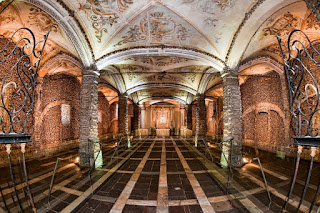
4. Glass Beach in Fort Bragg, California


I would want to go to the Glen Echo Amusement Park in Maryland. The park has a rustic and vintage vibe that would be really interesting to photograph. The park is open to the public and easy to access too, and that can open up a bunch of photo opportunities. The park is still kept in good shape so that the photos can be pleasing to the eye and still display an old-timey feel.
2.

3. Five Other Places I'd Love to Photograph:
1. Salar de Uyuni in Bolivia

2. Mendenhall Ice Caves, Juneau, Alaska

3. The Chapel of Bones (Capela dos Ossos) in Evora, Portugal.

4. Glass Beach in Fort Bragg, California

5. Shewdagon Pagoda in Yangon, Myanmar

4. Salar de Uyuni in Bolvia

Many people have documented Salar de Uyuni in both dry and wet season. This particular photo was taken by Hideki Mizuta, a photographer for National Geographic. A place for natural beauty, it attracts many photographers from science magazines around the world.
5. I think this would be a very unique and interesting place to photographer because of how reflective it is. The salt flat, went covered with water, reflects the sky and anything within the lake. I think that would make a lot of great and interesting opportunities to photograph the interesting visual effects the salt flats create.
6. To take this photo, I would need to make plans for a plane to Boliva, a place to stay, and means of travel to the salt flats. I would need certain attire and possibly be prepared for a little mountain climbing. The salt flats are near the Andes mountain range and are at an elevation over 3,000 feet. To take photos, it might be better to take the picture with a tripod in order to avoid unsteady photos.
Monday, October 26, 2015
Funny Captions
Funny Captions

Mr. Johnson sets up a sand bag barrier around his front yard and erects a machine gun, pointed straight down the walkway. That morning he had received a call that his in-laws were in town.

During his 80th birthday party, Jeremy Sanchez lit his cake on fire with a flamethrower because, in his words, some people just want to watch the world burn. Before that, he had received the news that Zayn had left One Direction.

Grandpa Randall, dressed in a suit, is dancing in a while a group of identically dressed people of all ages in follow his lead behind him. Two days before, his nephew complained that old people were "embarrassing", and Grandpa Randall set to prove him right.
Friday, October 16, 2015
Mural Project Q&A + Great Black and White Photographers (Part 3)
Mural Project Q&A
1. The theme should be something that embraces Bowie's individuality and uniqueness. It should be something that will put Bowie apart from any other high school in the district.
2. Phone cameras are preferable and if someone does not have a phone camera, they could coordinate with someone who does have a phone camera to borrow their phone to get their photos. We should keep using the regular cameras to a minimum for this.
3. I would want to place the mural somewhere at the front of the school where it can be displayed for everyone to see. Around the front entrance so that students can walk up to school and the mural will be the first thing they see.
Great Black &White Photographers (Part 3)
My chosen photographer was Lothar Woleh.
1. What caught my eye about his photos is that they stood out in the sense that they gave off a mysterious and almost eerie feeling. His photos usually feature a man standing nearly in the center of the photo, looking straight at the camera, in a mysterious setting (a spiraling staircase, a cathedral clouded by fog, sunlit steps, ect.) His photos were all in a different setting but a single man being present in the frame was a recurring pattern that I thought was really cool because it gave off a creepy vibe - like it was the same man appearing in each photo.


2. To answer this question, I have chosen the last two photos above (of the man standing amidst the fog in front of a cathedral and of the man sitting on a sunlit staircase).
(First picture) I see a large courtyard out in front of me, and there is white, thick fog clouding the world beyond it. Then suddenly it wisps away to reveal a mysterious man dressed in dark clothes. Further behind him, I see a cathedral rising from the mist, unveiling its majestic structure. I smell rain and a layer of musk underneath its freshness. The air is heavy and muggy, but slowly it unveils the acidic smell of asphalt from the street beyond the courtyard and the smell of exhaust fumes coming from the cars. I hear murmur of people passing by, and the distant rumble of cars on the street, but their sounds are muffled by the heavy fog. I hear the tolling of a bell from the cathedral - loud and booming and cutting through the blanket of mist. I taste rain on the tip of my tongue - cool and refreshing. I can taste the strong smell coming from the wet ground - earthy and moist. I feel cool raindrops rolling across my skin, and a chillness in the air. I feel dread on my shoulders and a shiver slipping down my spine.
(Second picture) I see the secluded hallway of an old and rundown subway. I see dirt on the chipped walls and dust settling in the air. At the end of the subway, I see a staircase, lit by sunbeams coming from the top and falling in geometric perfectness. I see a man sitting in the center, casting a great shadow on the ground. I smell the musk of exhaust from the subway carts and a spurt of stale cement, worn down over the years. I smell the sour scent of sweat and dirt and mug collecting over the years. . I smell metal from the rails. I hear air rushing from the staircase, and the quiet echo of people from above. I hear a distant subway bellow in greeting as it nears a neighboring station. But where I am, it is only a muffled mumble, and it is only me , the quiet beat of my heart, and the mysterious man. I taste the heavy smell of musk and exhaust. I taste salt and undercoat of salt and grime in the air. I feel the brush of a breeze coming from the empty tunnel behind me. I feel grit on the bottom of my shoes, and a thick layer of dust settling on my shoulders. I feel the heavy weight of dread in my chest and my heart in my chest.
3. I would like to use posters to show the world my photographer and his work because posters can be put up on walls and doors and windows to display them and can be exhibited in a creative and artistic way while still spreading a message to the viewers.
Thursday, October 8, 2015
Academic-Post Shoot Reflection + Critique
Academic Shoot

In this photo, I used rule of thirds by centering the subject to the right. The subject of my photo is young artist working on his art project in an art class. This subject is clearly shown in the picture because enough background details are given to let the viewer infer that the setting is in an art class and that there are students working on their art projects.

This photo uses the rule of simplicity, because there is nothing in the background to grab the attention away from the subject. The subject itself is a young photographer taking a photo of a subject we cannot see. Despite the lack of background to tell the viewer what's going on in the room, the subject in the photo is made clear because there is nothing else going on in the photo to create confusion about the subject.

The rules used in this photo are rule of thirds and balance. The subject is placed to the bottom right corner and the background creates balance in the photo. The subject in the photo is a guy holding out a music sheet in front of him. With the blurred background, the subject is easy to identify, but the context of the photo is not very clear. To make the context of the photo clear, I could have included details that clearly say what kind of class this is.

The rule I used in this photo is balance. The subject is the teacher, who has his hand up in the air to conduct the students. The subject in the photo is not very clear because behind the teacher, there is a lot of activity going on that draws away the spotlight. To make my subject more clear, I could have moved to a different spot to snap the photo in order to capture the teacher at a different angle where there were not students in the background.

The rule I used in this photo is balance. The subjects are the teacher and the student and their interaction. The subject in the photo is clear because there is not much going on in the background that may draw the viewer's attention away.
Academic Shoot Reflection + Critique
1. The challenge I ran into most was finding a class where there was some excitement going on. Many of the classes I considered with my group were giving lectures or just overall inactive. Another challenge I ran into was not being able to go to all the classes I had wanted to shoot photos of.
2. I thought a lot about focus and how I was holding the camera and at what angle I was shooting at. I would put myself in a position where I could capture what was going on in the classroom at a particular angle. Sometimes I'd make myself lower than the subject so that the angle would be looking up at them. Sometimes I would make myself higher and angle the camera down to be looking down at them and what they were doing.
3. If I could do the assignment again, I would mess a little more with the aperture, shutter speed, and ISO in order to change the lighting. I would change the focus of my photos too since a lot of them came out blurry.
Subscribe to:
Posts (Atom)